
Instructions
- Activating the YeastIn a small bowl, mix half a cup of warm water with the instant yeast and sugar, and set the mixture aside for 5 to 7 minutes until frothy and bubbly. · 7 min
- Kneading the DoughIn a large bowl, place the flour and salt, then add the yeast mixture, three tablespoons of olive oil, and the remaining warm water gradually. Knead the ingredients well for 8 minutes until a smooth, pliable, and non-sticky dough forms. · 8 min
- Proofing the DoughGrease a bowl with a little oil and place the dough inside, then cover it with a damp cloth and leave it in a warm place to rise and double in size. · 40 min
- Preparing the Za'atar MixtureIn a separate bowl, mix the za'atar with half a cup of olive oil until it reaches a spreadable, pourable consistency.
- Preheating the OvenPreheat the oven to the highest possible temperature (around 230-250°C), placing the baking sheet inside the oven to preheat.
- Rolling and Shaping the DoughDivide the dough into 4 equal balls, then roll each ball out with a rolling pin on a lightly floured surface into a medium-thickness circle, gently pressing the surface with your fingertips to help hold the topping.
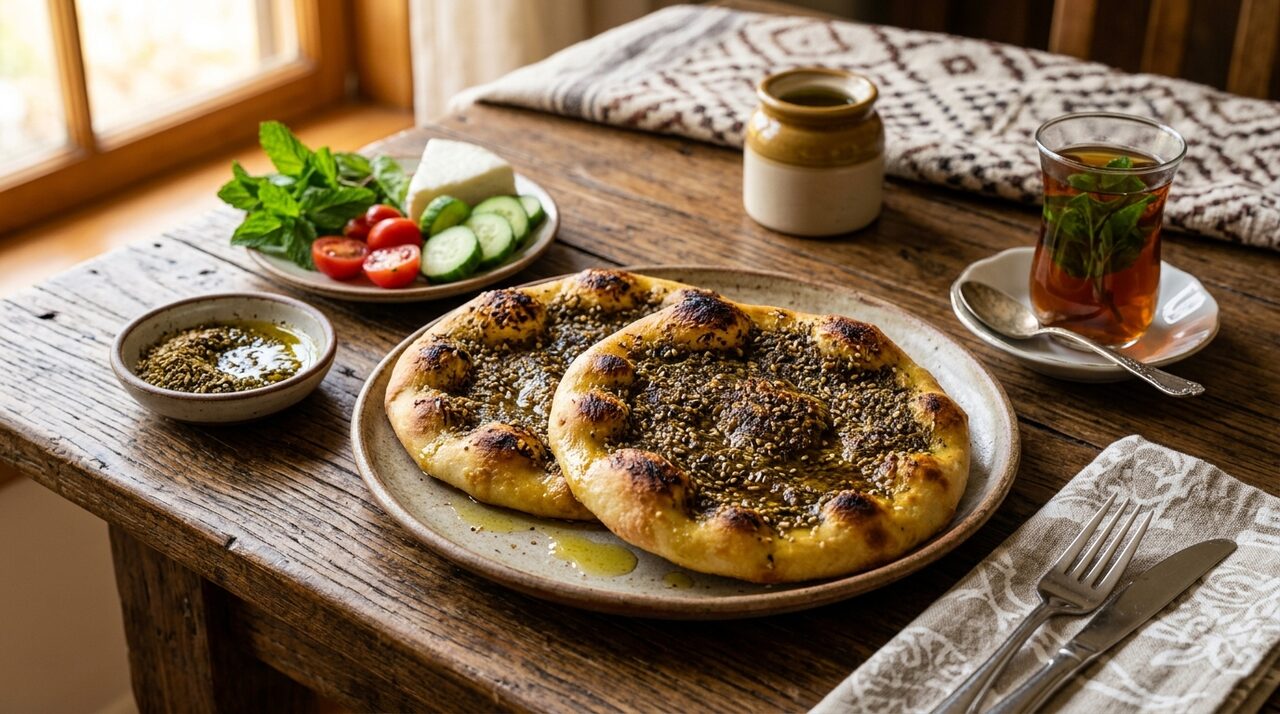
- Spreading the ToppingSpread two to three tablespoons of the za'atar and oil mixture over the surface of each round, leaving the edges slightly bare.
- BakingTransfer the manakish onto the hot baking sheet and bake for 8 to 10 minutes until the bottom is golden and crisp and the edges puff up slightly. · 9 min
Nutrition / serving
420
cal
7.5
protein g
52
carbs g
21
fat g
Chef's tips
To achieve a manousheh that is soft on the inside and crispy on the bottom, ensure the oven and baking sheet are thoroughly preheated, and avoid overbaking so the za'atar does not dry out and turn bitter.